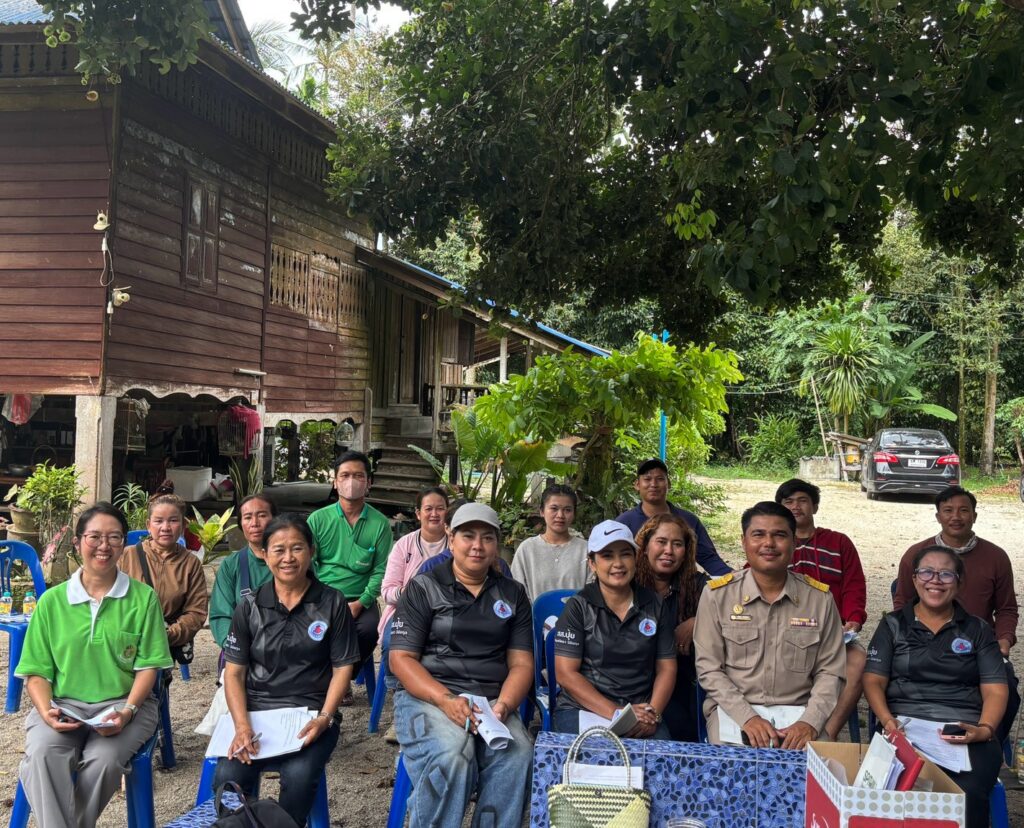
The School of Pharmacy at Walailak University, led by Asst. Prof. Dr. Butsabban Sukkan, organized a community service workshop titled “Diabetes Risk Assessment and Herbal Medicine for Diabetes Management” on August 21, 2026. The training is part of the research initiative: “Development of Smart Supply Chain Management Framework for Thai Cardamom as an Identity-Based Local Product: Integrating Community-Based Production and Quality Standards for Anti-Diabetic Health Products.”
The event welcomed diverse community members, including Mr. Sanong Thongyod (Vice President of Hua Taphan Subdistrict Administrative Organization), Mrs. Sopit Sangwan (President of Village Health Volunteers, Ban Thung Chon Health Promoting Hospital), local VHV members, Lao ethnic residents, the elderly, individuals with disabilities, bedridden patients, and their caregivers.
-
Self-Risk Assessment: Participants were trained to utilize the Department of Health’s risk assessment tool to identify early signs of diabetes without needing blood glucose meters, facilitating timely lifestyle modifications.
-
Rational & Safe Use of Herbs: The session shared evidence-based insights on herbs with blood glucose-lowering potential—such as ivy gourd, mulberry leaves and fruits, fenugreek, cinnamon, and turmeric. Key guidance emphasized consuming herbs as food, strictly avoiding replacing prescribed medical treatments, and consulting healthcare providers to prevent drug-herb interactions.
-
Promoting Local Thai Cardamom: The workshop highlighted preliminary in vitro findings on Thai Cardamom (a native botanical asset of Nakhon Si Thammarat), which demonstrated carbohydrate-digesting enzyme inhibitory activity, underscoring its value for future standardized health product development.
This initiative exemplifies the School of Pharmacy’s commitment to translating academic research into community empowerment. By fostering health literacy, safe herbal utilization, and local resource utilization, the project directly supports SDG 3: Good Health and Well-being to reduce non-communicable diseases (NCDs) and cultivate sustainable community wellness.
PHOTO