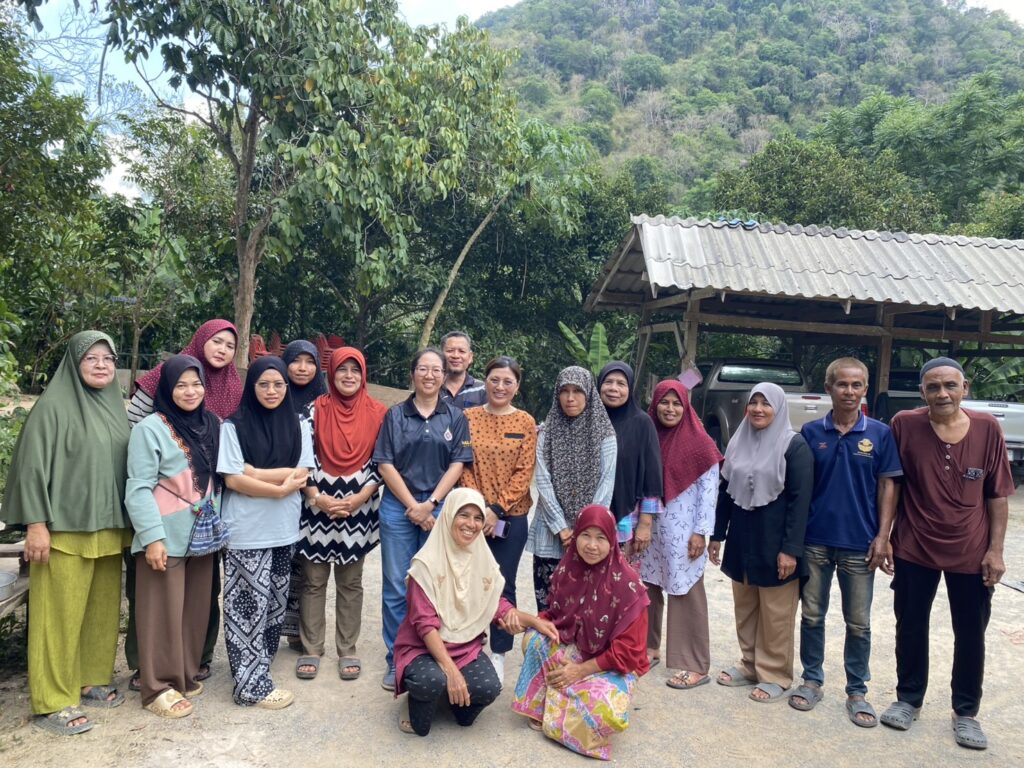
On April 28, 2026, the School of Pharmacy at Walailak University, led by Assistant Professor Dr. Busaban Sukarn, collaborated with special guest speaker Dr. Nattamon Kannika from the University of the Thai Chamber of Commerce to organize a knowledge-sharing seminar titled “Sustainable Herbal Logistics.” The event was held for members of the Ban Khao Wang Cardamom Community Enterprise at Moo 12, Hin Tok Sub-district, Ron Phibun District, Nakhon Si Thammarat Province.
The workshop is part of the research project “Developing a Smart Supply Chain Management Framework for Thai Cardamom towards a Geographical Indication (GI) Local Specialty Product: Integrating Community-Based Production with Quality Standards for Anti-Diabetic Health Products.” The initiative aims to enhance community capacity in upgrading Thai cardamom production and supply chain management to meet quality standards, thereby adding value to local herbal products.
The training focused on building comprehensive knowledge of logistics and supply chain management for herbal plants. Key areas covered included production, harvesting, collection, processing, quality control, transportation, and marketing. This equips community enterprise members with the tools to efficiently manage Thai cardamom across the entire value chain—from upstream and midstream to downstream—ultimately increasing product value, boosting competitive edges, and strengthening the community’s grassroots economy.
This initiative highlights the university’s vital role in translating academic research into community action. By empowering local entrepreneurs to achieve self-reliance, the project fosters the sustainable, efficient, and responsible utilization of local herbal resources.
Furthermore, this activity aligns with multiple Sustainable Development Goals (SDGs), including:
-
SDG 1: No Poverty – By promoting income generation and enhancing the economic capacity of community enterprises through the upgraded management of economic herbal crops.
-
SDG 2: Zero Hunger – By supporting agricultural development and adding value to local herbs, turning them into economic crops that secure community livelihoods and food security.
-
SDG 3: Good Health and Well-being – By developing high-quality herbal raw materials to be processed into health products, particularly those with the potential to promote health and prevent chronic non-communicable diseases like diabetes.
-
SDG 4: Quality Education – By transferring knowledge and building essential skills in logistics and supply chain management for community members to apply in their livelihoods.
-
SDG 17: Partnerships for the Goals – By fostering collaboration among universities, researchers, experts, and community enterprises to drive research into localized action, ultimately improving quality of life and fostering shared sustainable development.
PHOTO