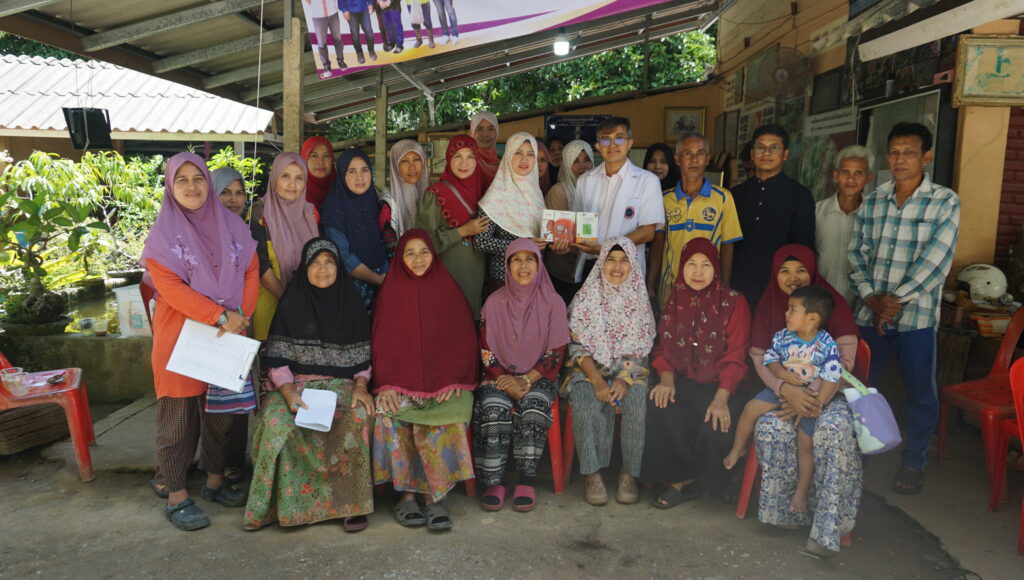
On August 27, 2025, at Ban Khao Wang Community, Ron Phibun District, Nakhon Si Thammarat Province, a research team from Walailak University, led by Asst. Prof. Dr. Attarat Pattanawongsa, Principal Investigator, together with co-researchers Asst. Prof. Dr. Bussabun Sukkan, Asst. Prof. Dr. Tanwa Binlateh, Assoc. Prof. Dr. Monthon Lertkanawanichkul, and Asst. Prof. Dr. Suebtarakul Wisetsombat organized a community outreach activity to disseminate knowledge on medicinal plants and health to more than 50 participants, including community enterprise members and village health volunteers (VHVs).
This activity was part of the research project entitled “Evaluation of Anti-Diabetic Activity and Selection of Endophytic Fungi Producing Bioactive Compounds from Thai Cardamom for Promoting Health Utilization”, funded by the Plant Genetic Conservation Project under the Royal Initiative of Her Royal Highness Princess Maha Chakri Sirindhorn (RSPG) for fiscal year 2025.
The knowledge transfer session focused on two key topics:
-
Understanding diabetes and the anti-diabetic potential of Thai cardamom cultivated in Ban Khao Wang community.
-
The study and selection of endophytic fungi isolated from Thai cardamom and their potential health benefits.
In addition, health screening services were provided to participants, including blood sugar and blood pressure measurement, along with personalized health advice from the research team.
Through this activity, community members gained accurate knowledge about diabetes, raised their awareness of prevention and health care, and recognized the value of Thai cardamom and its endophytic fungi in supporting anti-diabetic activity and other bioactive functions. The community also learned about the potential to further develop Thai cardamom into diverse value-added products, such as food, inhalants, balms, and herbal teas, which could contribute to both community health promotion and local economic development in the future.
Photo