Assistant Professor Dr. Attarat Patanawongsa and a research team of nine members are conducting a community-based research project entitled “Evaluation of Antidiabetic Activity and Selection of Bioactive Endophytic Fungi from Thai Cardamom (Amomum krervanh) to Promote Its Health Applications in Ban Khao Wang Community, Ron Phibun District, Nakhon Si Thammarat Province.”
This project aims to scientifically evaluate the health-promoting potential of Thai cardamom, a native medicinal plant cultivated in the Ban Khao Wang community. The research objectives include investigating the antidiabetic properties of Thai cardamom extracts and isolating endophytic fungi from the plant for their potential to produce bioactive secondary metabolites, especially those with activity against antibiotic-resistant bacteria.
For antidiabetic assessment, cardamom extracts will be tested for their inhibitory effects on key enzymes involved in blood glucose regulation, such as α-glucosidase and α-amylase. The extracts will also be evaluated in cultured liver cells to assess insulin sensitivity and their anti-inflammatory potential under high-glucose conditions.
In the microbial screening component, endophytic fungi will be isolated from various plant tissues of Thai cardamom. Each isolate will be cultured under laboratory conditions to induce secondary metabolite production, which will then be evaluated for antibacterial activity, particularly against antibiotic-resistant strains.
Although Ban Khao Wang already has an established community enterprise that produces cardamom-based health and wellness products — such as cardamom leaf tea, herbal balms, inhalers, soaps, toothpaste, mouthwash, and breath sprays — these products currently lack scientific validation of their efficacy. This research aims to fill this gap by providing scientific evidence to support the traditional use of cardamom and to unlock its broader potential in modern health applications.
Community Engagement Activities
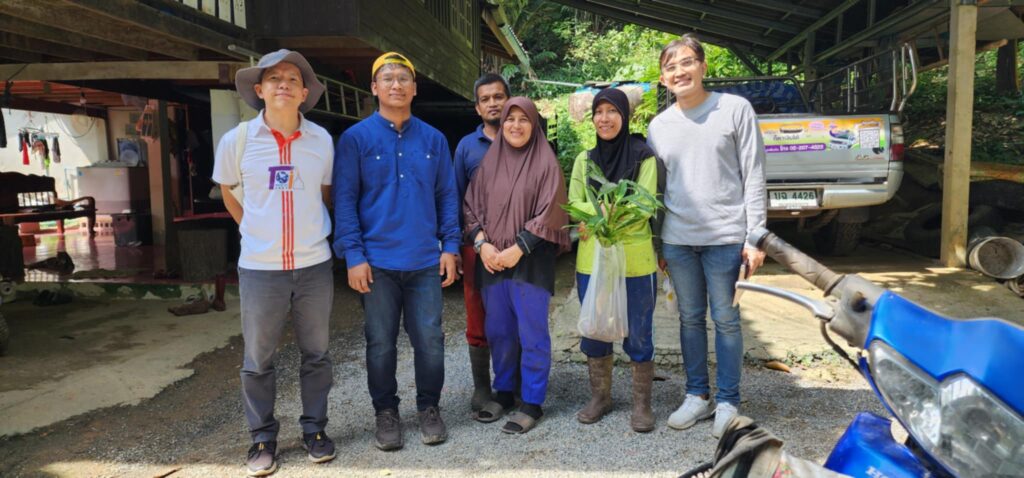
On December 25, 2024, Assoc. Prof. Dr. Attarat and the research team visited the Ban Khao Wang community and coordinated with Ms. Sakina Boonphon, the head of the community enterprise group. The objectives and potential benefits of the research project were discussed with the community. During this visit, the team also mapped the cardamom cultivation areas using GPS coordinates to be referenced in Google Maps. Thai cardamom is typically cultivated as an understory crop in orchards and rubber plantations. Plant samples were collected for laboratory analysis.
On the second field visit, January 11, 2025, the research team and students collected fresh plant samples for endophyte isolation. In the lab, the samples were cleaned, sectioned, and cultured on specific media to isolate endophytic fungi. Students from the PHA62-570 Special Project in Pharmacy course actively participated in this process and gained hands-on experience in ethnobotany and fungal isolation techniques.
The third field visit took place on January 19, 2025, with the participation of Associate Professor Dr. Chatchai Kalyanapapan, who joined the research team and community members to explore additional cardamom cultivation sites. GPS mapping of new planting areas was conducted, and additional plant samples were collected for ongoing laboratory investigations.
This research project not only advances the scientific understanding of Thai cardamom’s pharmacological potential but also supports sustainable development through the empowerment of local communities, conservation of traditional knowledge, and promotion of value-added native crops in Nakhon Si Thammarat.
Photo